Showing posts with label Handbook of Nature Study. Show all posts

Thursday, July 12, 2012

Foraging for Fungi

Recently we were invited by a friend to forage for fungi in a nearby forest.
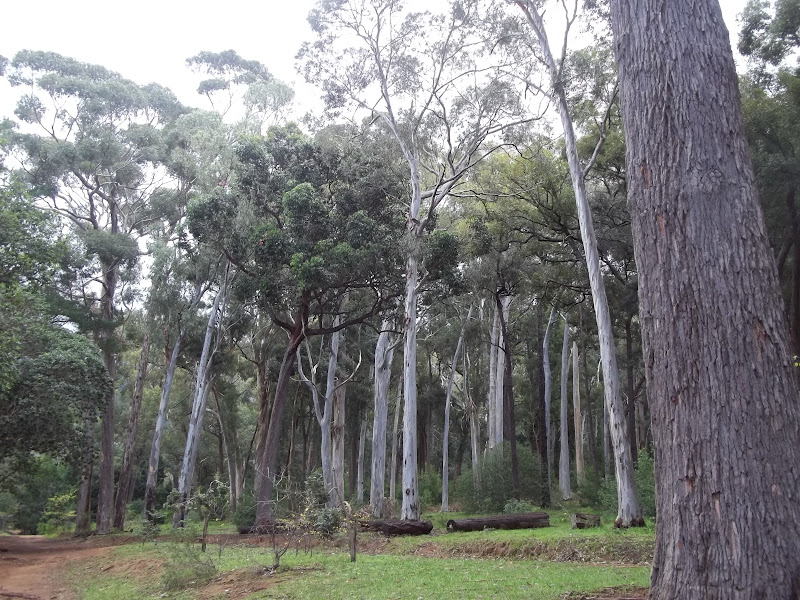
 Despite the cold weather, it was a wonderful winter outing and we enjoyed learning about the different types of fungi. We were led by an expert from the South African National Biodiversity Institute who shared her vast knowledge with us.
 As we set off into the forest and there were delighted squeals as the children and adults found various fungi hiding in the sodden ground.


Small groups scattered here and there, filling bags and baskets with beautiful specimens. 


It was great to have my sister in law, as well as my eldest son and his friend along with us. 


One of the boys seemed to be hunting for more than just fungi.....


Five or six scorpions were collected in his sock and he had a snake in his pocket!
 (I must say, I am glad it was not my son collecting all the creepy crawlies!)


On our return to the the meeting place, the fungi was  laid out on a log and the expert began to help us identify the various specimens. Most were inedible types unfortunately, though we did discover the Pine Rings which I hope to pick some time soon!


The dye ball on the left was fascinating- it contains natural dye which when mixed with various additives, produces different colours from bronze to salmon pink.
The stink-horn on the right, apparently releases a foul smell of carrion, which attracts flies that then disperse the spores. I love the beautiful pink inside.


The specimens above look so beautiful but they are the deadly Death Cap. Apparently a mere 30g is enough to cause liver and kidney damage and then death. 


All in all a wonderful couple of hours outdoors! 
Perhaps next week we will read about fungi in our Handbook of Nature Study and see if we have any specimens in the garden to record in our notebooks.


Friday, June 8, 2012

A little fresh air and lion's teeth

Today is the fourth day in row that it has been raining and cold, I am not complaining...I love the sound of rain drumming down onto the earth. I love the cosiness of a fire and the fact that the weather makes us want to stay indoors and take things a little slower. Last week we were blessed with some sunshine, and despite the nip in the air and the kids and I ventured out with a friend and took advantage of the "good" weather.

Not far from where we live is what used to be a forest. A large pine forest that holds many memories of good times with family and friends. Over the last while, the forest has been felled to make way for Fynbos.


We decided to do a circuit of the "forest".  
On the perimeter we passed a flower farm where the workers were chatting away happily as they were planting. In the long grass on the other side of the path we spotted a Blue Crane, our national bird. The views of Table Mountain against the clear sky were magnificent. In the distance, feathery plumes of Pampas Grass glistened in the sunlight.


Along the way we discovered the cutest little wooden seats carved from pines that had been felled. To the children's delight there was also a wooden swing. A patch of clovers was searched for a lucky four leafed clover. Frogs were belting out their songs as we passed the stream.


Wild Dagga or Lion's Tail displayed their brilliant orange blooms. In what is left of the pine plantation, squirrels chased each other in giddy circles around tree trunks. The scent of pine permeated the air, a scent I will never grow tired of. In contrast to the evergreen pines, some trees displayed the last of their autumn glory. I am sure they are now bare after the recent stormy weather.

Beside the path, Dandelions displayed their brilliant yellow blooms and perfectly rounded and fluffy seed bearing orbs. I had seen a section on them in our Handbook of Nature Study so we picked a few to bring home....


We learned so much about this delightful "weed" named after lion's teeth (dents-de-lion in French), due to the shape of the leaves. We learned how the yellow flowers don't open on dark and gloomy days. We studied the flowers, seed heads and parachute type seeds, and marvelled at the blossom bald seed head with it's mosaic pattern. We learned how the seed head is concave before releasing the seeds and later becomes convex and in doing so, the seeds embedded in it are liberated. It was most interesting to learn how this plant is able to conquer us and take possession of our land.

Once again we referred to my Companion Planting book and learned so much more regarding this little wonder which builds up the soil. We learned that the vitamin and mineral rich leaves could be eaten and each had a taste....a little bitter but it could be disguised in a salad, sprinkled over a soup or added to a stir fry. Apparently it makes a brilliant compost too, so from now on it shall be added to the compost heap.
The children made some pencil drawings for their nature journals.
My once reluctant youngest seems to be enjoying our nature studies more. Excitedly, he called me out to the garden the next day to show me his dandelion discoveries! 


I love the way this unplanned learning took place and look forward to visiting the area again and perhaps spending some time observing some of the other wonders of nature in that area. 

Saturday, May 12, 2012

Pretty Petunias

Over the years we have dabbled in a little nature study here and there but never really got into it as a regular feature in our days learning together. This year, it has been something we have wanted to enjoy on a more regular basis, and we are surprisingly almost half way through May with not much done in that department!

Yesterday, at the end of a long week with its own challenges, the beautiful autumn weather beckoned us outdoors to rectify that. We had a wonderful time, enjoying the sunshine and learning new things. We hope to make this a more regular feature in our days learning together, and I have been greatly inspired by the Outdoor Hour Challenges shared by Barb on her blog, "Handbook of Nature Study". 

We chose to study the bright petunias that add colour to the pots on the patio. 
Our primary source of information was the Handbook of Nature Study by Anna Botsford Comstock. We discovered the history of the petunia as we know it today, and that they are family of the potato, tomato, egg plant and tobacco plants. The shape of the flower and the scent given off at night attracts the hummingbird moth which has a perfectly suited long feeding tube.


We looked at the soft fuzzy leaves, adorned with fine hairs and  learned that the blooms only remain open for about two days before they droop and eventually fall off, leaving the seed capsule behind. Once dried out, the seed capsule will crack down the middle when disturbed and seeds will be spilled out. 


We found a dry bloom and managed to get to the seed capsule, discovering seeds as fine as dust. I remember a friend being surprised at some or other plant springing up in her pots, and on close inspection, discovering they were petunias. Now we know how they happened to just appear in the same place.

The children each did their own note-booking page, drawing their petunias and recording a little of what we had learned. I watched my youngest as he carefully studied the outline of his flower and slowly recorded what he saw in a beautiful pencil drawing. He does not consider himself a good artist but I think the finished drawing was just lovely!


K on the other hand, finds drawing easy and she quickly reproduced a colourful specimen for her notebook.

We also read from the book " Companion Planting " by Margaret Roberts, and the children learned my reason for having planted them alongside my cabbages and broccoli - they repel white fly, aphids and cutworms. 
Here we also read the story of an old English colonel who grew petunias in his garden as his own grandmother had told him the old wives tale of petunias calming badly behaved children. When asked if they had that effect on his noisy, active grandchildren, his reply was that he dared not be without them! Perhaps I too shall send the children outdoors to sniff petunias when next necessary!


We look forward to more nature study in the days to come.